
The Future of American Muscle That Never LandedThe electric Dodge Charger was supposed to represent the next chapter of American muscle. Instead, it stumbled before it ever found its footing. For decades, the Charger name stood for loud V8 engines, burnout videos,...

The New 2025 Dodge Charger EV FAILED: Here’s Why Buyers Rejected It
The New 2025 Dodge Charger EV FAILED: Here’s Why Buyers Rejected It
The Future of American Muscle That Never Landed
The electric Dodge Charger was supposed to represent the next chapter of American muscle. Instead, it stumbled before it ever found its footing. For decades, the Charger name stood for loud V8 engines, burnout videos, aggressive styling, and an unapologetic outlaw image. From Hellcats to Hemi powered cruisers, Dodge built an identity that leaned hard into excess and attitude.
That history is exactly why the 2025 Dodge Charger EV feels so out of place. This was not just a new model. It was a complete philosophical reset. Dodge did not simply electrify the Charger. It replaced everything longtime fans associated with the name. The result was immediate backlash, confusion from buyers, and a launch that struggled to connect with any clear audience.
This article breaks down what went wrong, why the electric Charger was rejected so quickly, and how Dodge misread both its loyal fanbase and the broader EV market.
2025 Dodge Charger EV Video Review
The Image Problem With the Dodge Charger Brand
James Lipman| Car and Driver
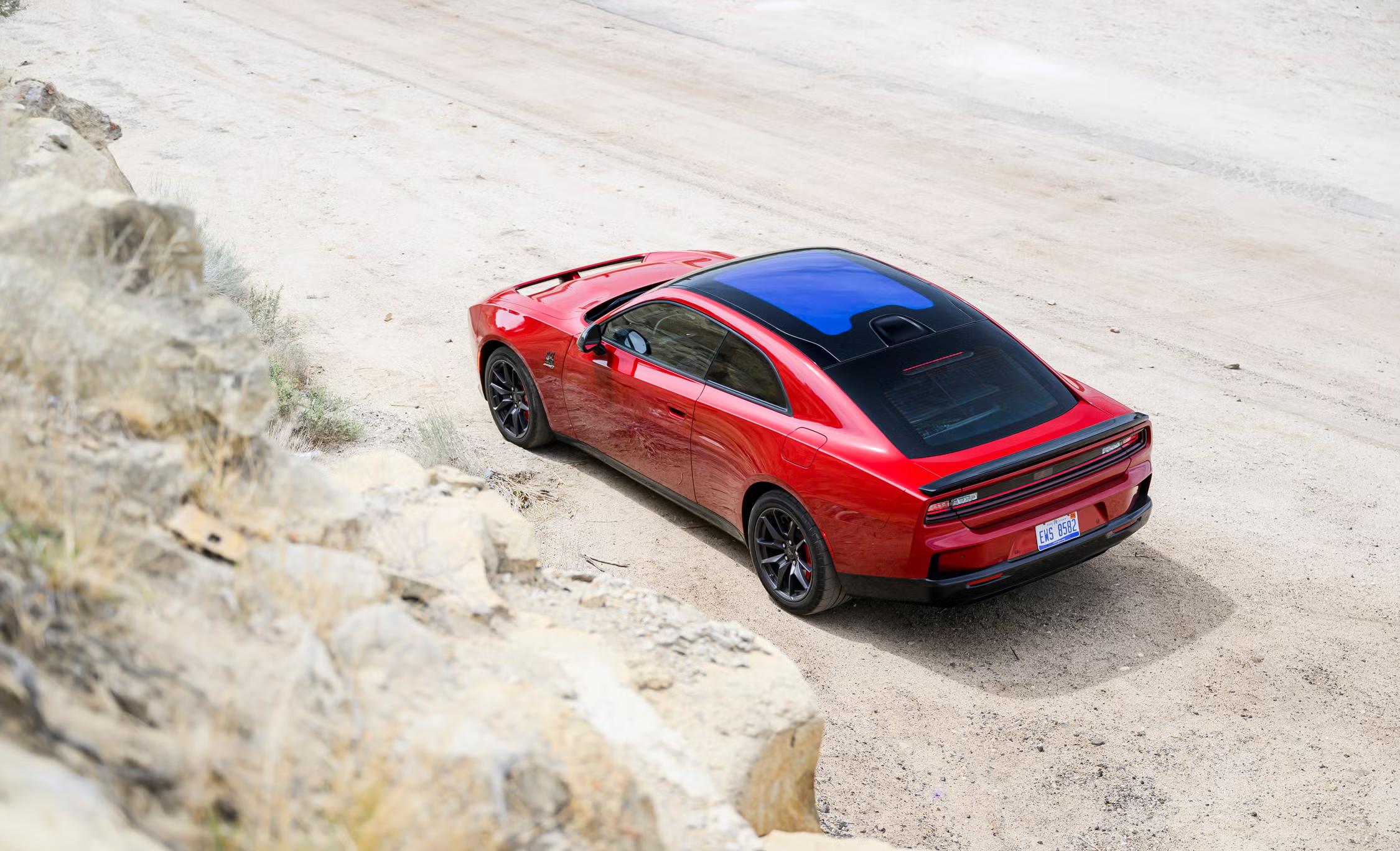
The Dodge Charger has always carried a very specific cultural image. It is tied to muscle car history, Hollywood car chases, Vin Diesel movies, and the modern Hellcat era of outrageous horsepower. Dodge leaned into that identity for years with loud marketing, wild colors, and an almost rebellious tone.
That image does not translate easily to electric vehicles. EVs tend to attract buyers who value efficiency, modern tech, refinement, and quiet performance. Charger buyers historically wanted drama, noise, and mechanical personality. Dodge spent decades teaching people what a Charger should be, then asked those same buyers to accept a silent electric coupe wearing the same badge.
Brand equity cuts both ways. The Charger name is powerful, but it also comes with expectations. When those expectations are ignored, the badge becomes a liability instead of an asset.
Why Launching the Charger as an EV First Was a Mistake
Launching the Charger as an EV before offering a gas powered alternative was the single biggest strategic failure. Core Charger fans want V8 rumble, physical presence, and emotional feedback. Electric vehicles deliver speed, but not necessarily the experience those buyers crave.
At the same time, EV buyers are not looking for a Dodge Charger. They tend to gravitate toward brands that emphasize technology, luxury, or sustainability. For that audience, the Charger EV looks too aggressive, too loud visually, and too tied to a muscle car culture they are not part of.
The overlap between traditional Charger buyers and EV shoppers is almost nonexistent. For enthusiasts, the EV felt like a betrayal. For EV buyers, it felt like the wrong brand trying to play catch-up. Dodge effectively launched a car for an audience that does not exist in meaningful numbers.
Styling Was Not the Problem
James Lipman| Car and Driver
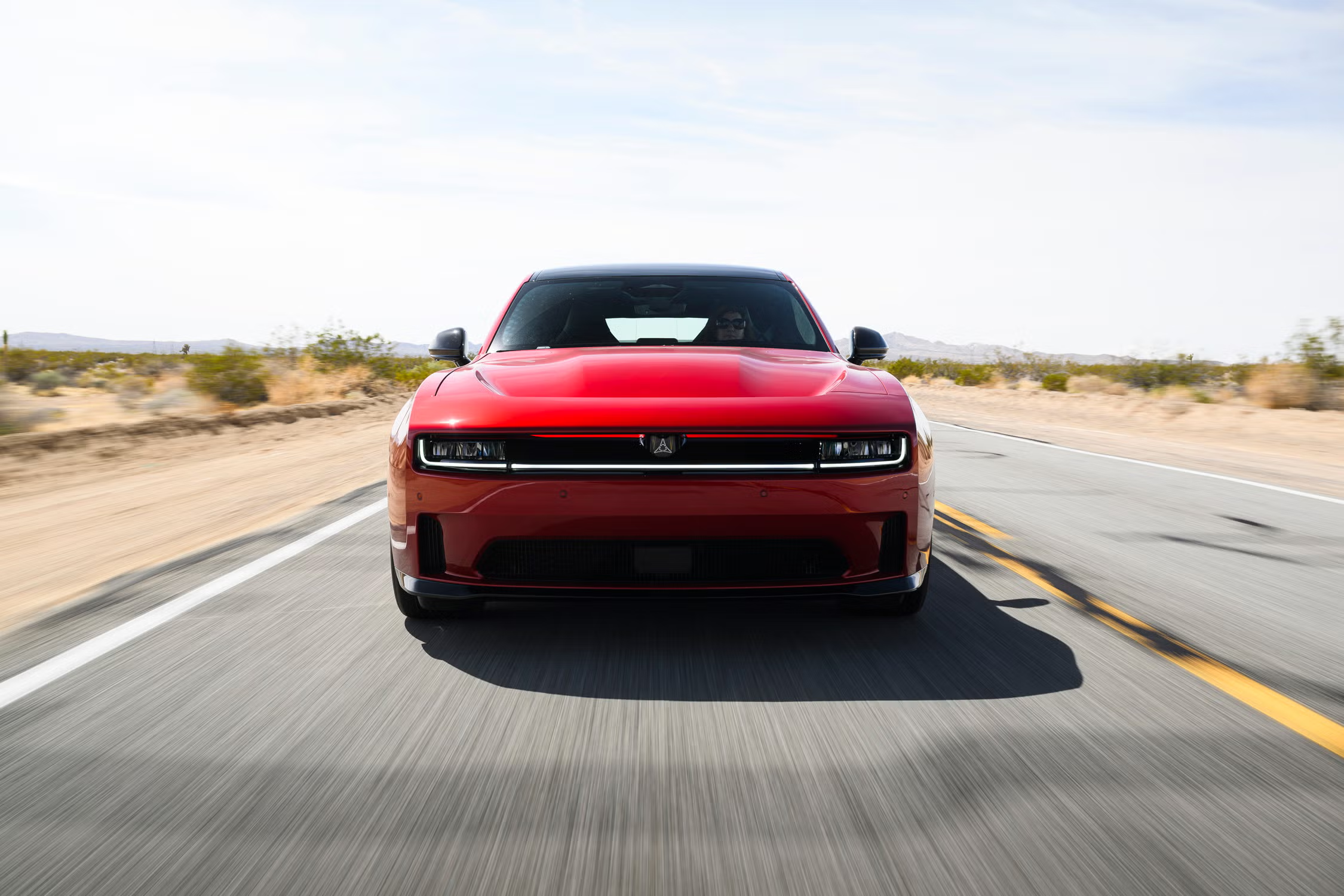
If there is one area where Dodge deserves credit, it is the design. The new Charger coupe looks good. The proportions are right, with a wide stance, long hood, and muscular silhouette that clearly references classic Chargers. Visually, it still feels like a Dodge.
The interior also makes a strong first impression. The materials look solid, the layout is modern, and the tech feels current. That said, the large tablet-style screens divide opinion. Some buyers appreciate the digital focus, while others see it as another sign that the Charger is drifting away from its analog roots.
The key takeaway is simple. The Charger EV looks like it should work. The problem was never the design. It was the strategy behind it.
Fake Exhaust Noise and Unremarkable EV Performance
Dodge attempted to bridge the gap between old and new with the Fratzonic synthetic exhaust system. The idea was to recreate the emotional impact of a V8 through speakers. While ambitious, the execution highlighted the problem instead of solving it.
Synthetic sound reminds buyers of what is missing rather than replacing it. For longtime Charger fans, fake noise feels hollow. For EV buyers, it feels unnecessary and gimmicky. Neither group was truly satisfied.
Performance numbers on paper are strong, but that no longer sets a car apart. Nearly every electric performance car is quick. Acceleration alone is not a differentiator anymore. The Charger EV is fast, but it is not faster than competitors buyers already trust. Without a clear advantage, speed becomes background noise in a crowded EV market.
The Buyer Demographic Clash
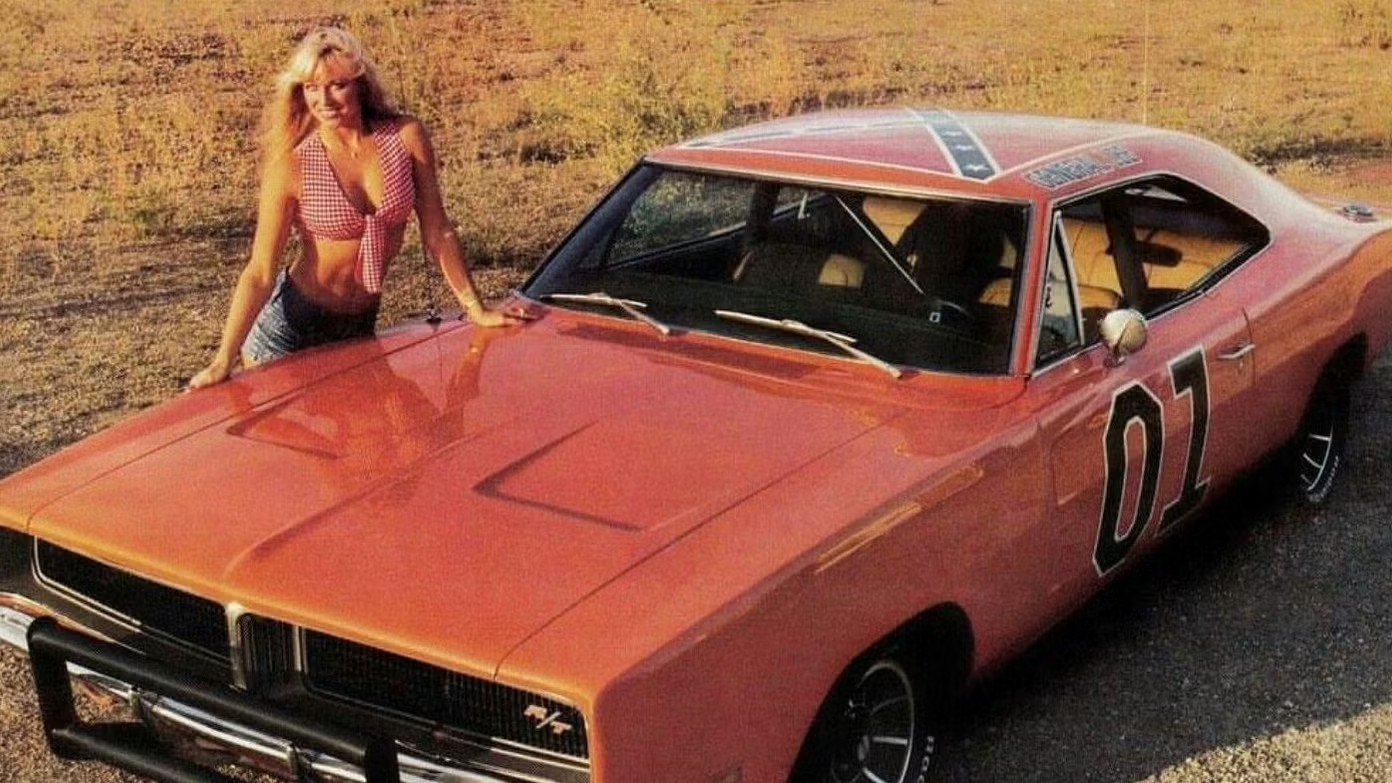
This is where the Charger EV launch truly collapsed. Dodge buyers traditionally lean toward mechanical cars with character. They value sound, presence, and familiarity. They are not the primary audience pushing for electric adoption.
On the other side, EV buyers want polish, efficiency, and brands that align with a clean or futuristic image. Dodge does not naturally appeal to that group. The Charger EV sits awkwardly between two worlds, accepted by neither.
Dodge tried to modernize without understanding who was actually asking for that modernization. The result was a product that satisfied neither its past nor its potential future.
The Too-Late Fix: The Charger Sixpack

After backlash, Dodge announced the Charger Sixpack, a turbocharged six cylinder alternative. On paper, this should help. It is lighter than the EV, offers a more traditional driving experience, and brings back some mechanical engagement.
Conceptually, it resembles a modern American performance coupe, almost a domestic answer to cars like the Nissan GT-R. But timing matters. By the time the Sixpack was announced, trust had already been damaged. Many buyers saw it as damage control rather than a confident product plan.
The Ram 1500 situation tells a similar story. Stellantis attempted to move away from the Hemi V8, only to reverse course after buyers voted with their wallets. The message is clear. Performance buyers want choice, and they want sound.
The Hemi Question

No discussion of the Charger is complete without talking about the Hemi. The name is inseparable from the Charger identity. Most industry watchers believe a V8 will return eventually, because the Charger brand struggles to exist without it.
If the Hemi comes back, Dodge faces difficult decisions. Does it sit above the Sixpack as a flagship? Does Dodge create a lower-output V8 to satisfy purists while keeping turbo models at the top? How Dodge answers these questions will determine whether the Charger can recover.
The Hemi is not gone forever. The real issue is how long Dodge waits, and how much damage is done in the meantime.
Final Thoughts: A Great Car Launched the Wrong Way
The 2025 Dodge Charger EV is not a bad car. It looks good, performs well, and offers modern technology. But it was launched with the wrong strategy. Going EV first alienated loyal buyers, while failing to attract new ones.
The Charger Sixpack helps, but it does not erase the initial misstep. Dodge built its reputation on understanding its audience, then ignored that audience at the most critical moment.
The Charger’s future depends on balance. Performance with tradition. Innovation with choice. Without that balance, the Charger risks becoming a badge without an identity.
Should Dodge have launched with gas first, or was this electric direction a necessary mistake?
Never Miss Content, Sign Up For The Newsletter

More To Explore

The New 2025 Dodge Charger EV FAILED: Here’s Why Buyers Rejected It

2026 Honda Prelude Hybrid: The Controversial Comeback That Honda Fans Didn’t Want
A Name From the Past Returns in a Totally Unexpected WayThe Honda Prelude is back, but it is not the triumphant return many long-time fans were hoping for. Instead of reviving the high revving, manual shifting coupe that once stood at the forefront of Honda’s...

Save Money With DIY Car Maintenance
How To Change Your Oil YourselfSave money with simple DIY car maintenance. Easy tasks like bulbs, filters, and wipers on a 2015 Ford Focus can be done at home without shop costs.How To Change Your Oil VideoNever Miss Content, Sign Up For The Newsletter[convertkit_form...

FuelFest Los Angeles 2025 Car Show Highlights
FuelFest Los Angeles 2025 Car Show HighlightsFuelFest Los Angeles 2025 packed an incredible mix of JDM icons, American muscle, exotics, and high-end builds all in one place. The event had a huge turnout, nonstop energy, and some of the best detailed show cars in...

2000 Roush Mustang Stage 3 Retro Review: A New Edge Icon With Serious Attitude
Roush Mustang History and What Makes It UniqueIf you own a Roush Mustang, you already know the routine. People ask what a Roush is, whether it is fast, and how rare they are. Roush is an engineering company that builds tuner style Mustangs similar to what Saleen or...


